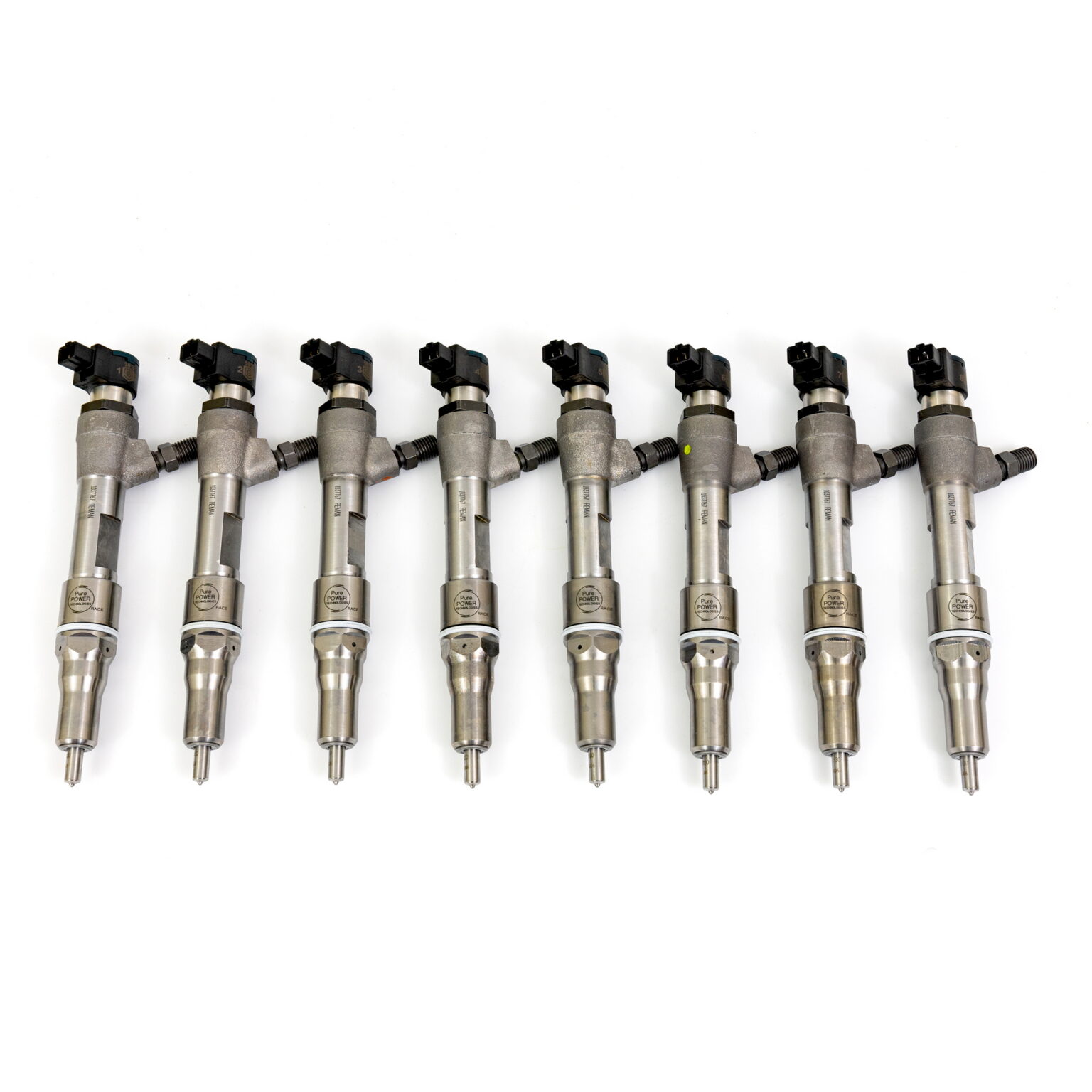
A contaminated CP4 failure on a 6.7L Power Stroke can require much more than a new high-pressure pump. If metal debris reaches the injectors, fuel rails, lines, return system, and tank, the repair can become a complete fuel-system replacement costing approximately $10,000 to $15,000.
The exact cost depends on one question: Did the pump fail mechanically, or did it fail and contaminate the rest of the fuel system?
That distinction determines whether the truck needs a limited repair or a complete teardown.
Why Does CP4 Replacement Cost So Much?
The Bosch CP4.2 is the high-pressure fuel pump used on 2011 to 2025 Ford Super Duty trucks equipped with the 6.7L Power Stroke.
A normal fuel-pump failure would be expensive but relatively contained. The CP4 becomes much more costly when internal wear produces metal debris.
The pump is connected directly to the high-pressure fuel system. Once metal enters that circuit, it can move into the rails, injectors, lines, return system, and fuel tank. Instead of replacing one damaged component, the technician may need to replace or decontaminate nearly everything the fuel touched.
S&S currently estimates that a complete CP4-related fuel-system repair can cost between $10,000 and $15,000.
Can You Replace Only the CP4 Pump?
Sometimes, but only if the pump is caught before metal contamination spreads through the system.
A pump-only repair should never be assumed. The system has to be inspected first.
The S&S Gen2.1 installation instructions tell technicians to remove the fuel control actuator and inspect the metering unit for debris before installing the Disaster Prevention Kit. If the actuator resembles the contaminated example shown in the instructions, S&S states that the pump and fuel system must be replaced.
In practical terms, the repair decision looks like this:
| Inspection result | Likely repair direction |
| No metal found and the fault is isolated to the pump | The repair may remain focused on the high-pressure pump and related installation parts |
| Metal found at the fuel control actuator or metering unit | The rest of the fuel system must be inspected for contamination. Metal here is usually the best indicator of a CP4 failure. |
| Metal found throughout the high-pressure and return systems | A complete fuel-system replacement or extensive decontamination is usually required |
| Gen2.1 return filter contains metal | The CP4 has likely failed or is failing, but the kit may have contained the debris before it reached the protected high-pressure system |
The important point is that a new pump should not be installed until the condition of the rest of the system is known.
What Must Be Replaced After a Contaminated CP4 Failure?
There is no single parts list that applies to every truck. The final repair depends on where the debris traveled and what the technician finds during inspection.
A severe contamination event may involve the following areas:
| Fuel-system area | Why it may require replacement or service |
| High-pressure fuel pump | The CP4 is the source of the internal metal debris |
| Fuel injectors | Extremely small internal passages can trap metal and suffer scoring or sticking. Hardened debris can also indent the high-pressure sealing surface of the injector control valve, causing internal leakage and lost rail pressure. |
| Fuel rails | Debris can remain inside passages that are difficult to clean reliably |
| High-pressure fuel lines | Metal can travel through the lines between the pump, rails, and injectors |
| Fuel return system | Return fuel may carry debris away from the pump and toward the tank |
| Fuel filters | Filters must be replaced after contamination and inspected for evidence of metal |
| Supply pump and low-pressure lines | These components may require inspection if debris reached the return side and tank |
| Fuel tank and sending unit | The tank may need to be removed, cleaned, or replaced if metal returned to it |
This is why the bill grows so quickly. Eight injectors, multiple fuel lines, two rails, the pump, labor, and fuel-system cleaning can turn one failed component into a major repair.
Why Can’t the Metal Simply Be Flushed Out?
Common-rail diesel fuel systems operate with very small internal clearances. A piece of metal that appears insignificant to the eye can still damage an injector, control valve, or replacement pump.
The problem is not only the metal you can see. Fine particles can become trapped in passages inside the rails, injectors, connectors, and return system.
A basic flush may move loose contamination, but it cannot guarantee that every particle has been removed from every precision component. Installing expensive new parts while contaminated components remain in the system can lead to another failure.
That is why the repair scope should be based on inspection, not on the hope that the system is probably clean.
How Does Metal Spread Through the 6.7L Power Stroke Fuel System?
The original fuel-flow arrangement allows fuel to pass through the CP4 case and feed the metering unit and high-pressure pumping elements. High-pressure fuel then travels to the rails and injectors, while return fuel moves back toward the tank.
If the CP4 begins producing metal internally, those connected fuel paths give the debris more than one direction to travel.
The S&S fuel-flow diagram compares the factory routing with the Gen2.1 Disaster Prevention Kit. In the factory arrangement, the pump case and pumping side share an internal feed path. The Gen2.1 system blocks that path, supplies the case and metering side independently, and sends case return fuel through a dedicated filter before it can reach the tank.
That diagram belongs in this article because it explains why the repair can extend so far beyond the pump itself.
How Do You Confirm That a CP4 Contaminated the System?
Symptoms such as hard starting, reduced power, stalling, and low rail pressure do not prove that the pump has spread metal.
Physical inspection is what matters.
Before installing the S&S Disaster Prevention Kit, the instructions call for the fuel control actuator to be removed and inspected. Visible metal or debris at the metering unit indicates that the pump is already damaged and the fuel system requires replacement.
If an S&S Gen2.1 kit was installed before the failure, S&S recommends cutting open the dedicated Donaldson return filter and inspecting the media for metal debris. The instructions describe this as the quickest way to confirm a suspected CP4 failure after the kit has been installed.
The location of the metal also tells the technician something important. Metal captured in the dedicated return filter suggests the kit contained the pump debris. Metal found throughout the factory fuel system points toward a much larger repair.
Why CP4 Failures Are Frequently Misdiagnosed
Not every piece of metal found in a 6.7L Power Stroke fuel system came from a failed CP4. This is one of the most common reasons trucks are quoted a full fuel-system repair they may not need.
Ford’s diagnostic procedure directs technicians to remove the pressure control valve (PCV) from the fuel rail and inspect its screen for metal. The problem is that a small amount of fine debris on that screen is not unusual on a healthy truck. It can be manufacturing debris left in the system, or particles that made it past a filter. Because the CP4’s reputation is so well established, any metal at all now tends to be recorded as a pump failure.
In our experience the distinction is one of quantity, not presence. When a CP4 genuinely fails, the PCV screen is loaded up and clogged, not lightly speckled. A few flakes out of the rail does not by itself establish that the pump has come apart.
Metal at the volume control valve (VCV), the fuel control actuator on top of the pump, is the better indicator, which is why the S&S instructions call for inspecting the metering unit before any kit is installed. And the only way to know with certainty whether the injectors were damaged is to test the injectors.
That last point matters because injector damage from CP4 debris is not always visible. Hardened tool steel from the pump can leave microscopic indents in the high-pressure sealing surface of the injector control valve. The injector keeps firing, but it leaks internally, and the truck shows a loss of rail pressure as the pump struggles to keep up with the leakage.
The practical takeaway for an owner: before authorizing a five-figure repair, ask what evidence the diagnosis is based on, and where the metal was found. This video walks through how CP4 debris damages an injector control valve.
How Much Does a 6.7L Power Stroke CP4 Repair Cost?
A complete contaminated fuel-system repair can cost approximately $10,000 to $15,000, according to S&S.
The actual amount can vary considerably based on the truck, labor rates, parts selection, and extent of the contamination.
| Repair factor | How it affects the final bill |
| Metal contained near the pump | Fewer components may require replacement |
| Metal in the rails and injectors | Injector, rail, and high-pressure line costs are added |
| Debris returned to the tank | Tank removal, cleaning, supply-system inspection, and additional labor may be required |
| Dealer versus independent shop | Labor rates and parts policies can differ significantly |
| New, remanufactured, or upgraded parts | The selected replacement components change the total |
| Replacing the CP4 with a DCR | Adds the conversion cost but removes the original CP4 design from the truck |
The $10,000 to $15,000 figure should be presented as the potential cost of a heavily contaminated repair, not as the guaranteed price of every CP4 replacement.
What Should You Do Immediately After a Suspected CP4 Failure?
Do not keep restarting the truck to see whether the problem clears up.
Every additional key cycle can circulate more fuel through the system. If the pump is producing metal, continued operation may spread that contamination farther.
The truck should be scanned for pressure-related faults and the fuel system should be inspected before new parts are ordered. The technician should evaluate the low-pressure supply side, commanded versus actual rail pressure, the fuel control actuator, filters, and visible fuel-system components.
If metal is found, the engine should remain off until the repair plan is established.
Can a DCR Pump Be Installed After the CP4 Has Failed?
Yes. A DCR conversion can be installed after a CP4 failure, but the contaminated fuel system must be properly cleaned or replaced before the new pump is put into service.
The S&S and PurePower DCR conversion replaces the Bosch CP4 with a Stanadyne-designed two-piston pump. It is currently listed at $2,400 and fits 2011 to 2025 Ford F-250 through F-750 trucks equipped with the 6.7L Power Stroke. No engine calibration changes are required.
Installing a DCR during the repair prevents the truck from returning to the original CP4 design. It does not eliminate the need to address contamination that is already in the system.
A clean new pump installed into a dirty fuel system can still be damaged.
Does a Disaster Prevention Kit Help After the CP4 Has Already Failed?
A Disaster Prevention Kit cannot undo contamination that has already spread through the fuel system.
The kit must be installed while the CP4 and fuel system are still clean.
The S&S Gen2.1 kit changes the pump’s internal fuel routing and adds a dedicated return filter. Its purpose is to contain debris if the CP4 fails later.
The complete kit is currently listed at $400, and the product description identifies fitment for 2011 to 2025 Ford Super Duty pickups with the 6.7L Power Stroke. The product-page application menu currently displays “2011+,” but the written description and March 2025 instructions still identify 2011 to 2025 fitment.
If the pump has already contaminated the system, the owner is no longer choosing prevention. The first priority becomes diagnosis, cleaning, and replacement of the affected components.
CP4 Failure Before and After Contamination
| Situation | What the owner is dealing with | Relevant option |
| CP4 is operating normally and the fuel system is clean | Future risk of a pump failure spreading debris | Install a Gen2.1 Disaster Prevention Kit or replace the CP4 with a DCR |
| CP4 symptoms are present but no metal has been confirmed | A fuel-system problem that still requires diagnosis | Stop driving under load and inspect the system |
| CP4 has failed but debris was contained by a Gen2.1 kit | A failed pump with potentially limited downstream contamination | Replace the failed pump, filter, and any other affected components after inspection |
| Metal has spread through the factory system | A complete contamination repair | Replace or thoroughly service all affected fuel-system components |
| Truck is being rebuilt after contamination | An opportunity to choose the replacement pump design | Install a replacement CP4 or convert to a DCR after the system is clean |
Frequently Asked Questions
How much does it cost to replace a CP4 on a 6.7L Power Stroke?
A contaminated CP4 failure can lead to a complete fuel-system repair costing approximately $10,000 to $15,000. A repair caught before contamination spreads may cost less because fewer components may need replacement.
Does the entire fuel system always need to be replaced?
Not automatically. The repair depends on whether metal debris is present and where it has traveled. Once metal is found throughout the system, replacing only the pump is not a reliable repair.
Can I replace the CP4 without replacing the injectors?
Only if inspection confirms that the injectors and the rest of the high-pressure system were not contaminated. If metal reached the injectors, they may require replacement.
Can the fuel rails be flushed after CP4 failure?
Cleaning may remove some loose debris, but it cannot guarantee that every microscopic metal particle has been removed from internal passages. The technician must determine whether the rails can be safely reused.
What happens if metal remains in the fuel system?
Remaining debris can damage replacement injectors, control valves, rails, or the new high-pressure pump. The result may be another expensive repair.
Should I install another CP4 or convert to a DCR?
A replacement CP4 returns the truck to its original pump design. A DCR conversion removes the CP4 and replaces it with a different high-pressure pump design. The best choice depends on budget, truck use, and long-term ownership plans.
Can a Disaster Prevention Kit be installed after CP4 failure?
It can only be installed after the failed pump and contaminated fuel system have been properly repaired. It cannot remove or contain metal that already traveled through the system before installation.
How can I tell whether my Gen2.1 kit caught the debris?
S&S recommends cutting open the dedicated Donaldson return filter and inspecting the media for metal. Metal captured there indicates that the CP4 is failing or has failed and that the return filter has collected the debris.
Does metal on the PCV screen mean my CP4 failed?
Not on its own. A small amount of fine debris on the pressure control valve screen is not unusual and can come from manufacturing debris or particles that passed a filter. A genuine CP4 failure typically loads and clogs that screen. Metal at the volume control valve is a stronger indicator, and injector testing is the only way to confirm whether damage was actually done.