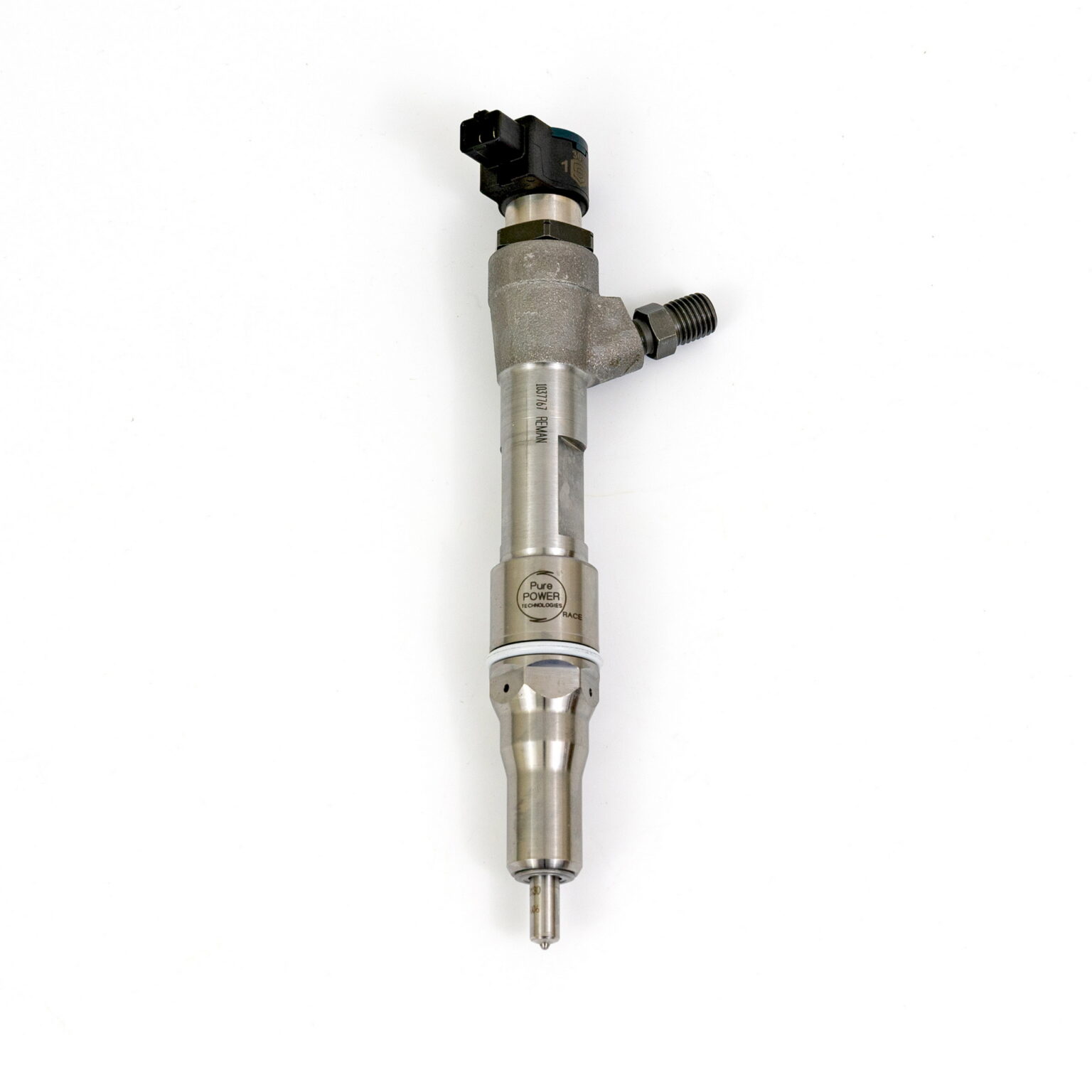
CP4 failure on a 6.7L Power Stroke can cause hard starting, reduced power, unexpected stalling, fuel-pressure faults, or a crank-no-start condition. Some pumps fail with little useful warning. The real expense begins when internal wear produces metal debris that reaches the injectors, fuel rails, lines, and tank.
Once that contamination spreads, the repair can cost $10,000 to $15,000. Knowing what to watch for helps, but symptoms alone do not confirm a bad CP4.
Proper inspection is what separates a fuel-pressure problem from an actual pump failure. S&S reports that the CP4 can fail without warning, cause sudden power loss, and damage the high-pressure fuel system.
Which 6.7L Power Stroke Trucks Have a CP4?
Ford has used the Bosch CP4.2 high-pressure fuel pump on the 6.7L Power Stroke since the engine was introduced for the 2011 model year.
This guide focuses on 2011 to 2025 Ford Super Duty trucks, which is the fitment currently listed in the S&S Gen2.1 Disaster Prevention Kit product information and installation instructions. The instructions cover standard Super Duty applications and identify a separate kit part number for the F-650.
The CP4 is part of the truck’s common-rail injection system. It takes low-pressure fuel supplied from the tank and raises it to the pressure required by the fuel rails and injectors. Bosch describes the CP4 as a fuel-lubricated pump with one or two high-pressure pumping elements driven by its own camshaft.
What Are the Symptoms of CP4 Failure on a 6.7L Power Stroke?
Possible CP4 failure symptoms include:
- Hard starting or extended cranking
- Crank but no start
- Reduced engine power
- Loss of power while towing or accelerating
- Unexpected stalling
- Fuel-rail-pressure faults
- Actual rail pressure falling behind commanded pressure
- Metal debris found during fuel-system inspection
The important word is possible. Hard starting, stalling, reduced power, and fuel-pressure faults can also come from restricted filters, low-pressure fuel supply problems, injector return issues, sensors, wiring, or other parts of the fuel system.
A symptom gives you a reason to diagnose the truck. It does not prove that the CP4 is failing.
Hard Starting or Extended Cranking
The engine needs adequate rail pressure before it can start. A worn or damaged high-pressure pump may take longer to build that pressure, leading to extended cranking or an intermittent no-start.
This can also happen because of low-pressure fuel delivery problems, air entering the system, restricted filters, or excessive injector return. Rail pressure needs to be checked before blaming the pump.
Reduced Power Under Load
A truck may run normally at idle or during light driving but lose power when towing, accelerating, or climbing a grade. That can happen when the fuel system cannot maintain the pressure being commanded under greater demand.
Reduced power is worth investigating, especially when it returns repeatedly, but it still does not identify the CP4 by itself.
Stalling or Sudden Shutdown
A serious pressure loss can cause the engine to stall or shut down. In some cases, the truck may restart and seem normal afterward.
That does not mean the problem has resolved. An intermittent stall should be diagnosed before the truck is placed back under heavy load.
Fuel-Pressure Faults
Fuel-rail-pressure faults can appear when actual pressure does not match what the engine control system is requesting. These codes help point the technician toward the fuel system, but further testing is still required.
Ford’s fuel-system controls use the high-pressure pump, fuel metering unit, pressure control valve, and rail-pressure sensor together. A fault involving pressure can originate from more than one component.
Metal Debris in the Fuel System
Metal is the strongest physical warning that internal damage has occurred.
The S&S installation instructions tell technicians to remove and inspect the CP4 fuel control actuator before installing the Disaster Prevention Kit. If its metering unit resembles the contaminated example shown in the instructions, S&S says the pump and fuel system must be replaced.
If an S&S Gen2.1 Disaster Prevention Kit is already installed, the instructions say the quickest confirmation is to cut open the dedicated Donaldson return filter and inspect the filter media for metal debris.
Metal in either location is not something to monitor for another few weeks. Stop running the truck and have the complete system evaluated.
Can a CP4 Fail Without Warning?
Yes. A CP4 can fail with little or no warning that the driver recognizes beforehand.
Some owners experience hard starting, pressure faults, reduced power, or stalling first. Others find themselves dealing with a sudden shutdown or no-start condition without an obvious buildup of symptoms.
That is one reason visual inspection and contamination control matter. By the time the truck clearly tells you there is a high-pressure fuel problem, metal may already be moving through the system.
Why Do CP4 Pumps Fail?
The CP4 is a fuel-lubricated high-pressure pump. Diesel fuel is not only the fluid being pressurized, it also lubricates the pump’s internal moving parts. Bosch’s own technical description confirms that the CP4 uses a camshaft to operate its high-pressure pumping elements and relies on fuel lubrication.
When internal mechanical wear develops, metal can be generated inside the pump. Once that material reaches the pump’s fuel paths, it can move toward the high-pressure rails or return to the low-pressure side of the system.
Fuel quality also matters because the pump depends on clean diesel for lubrication. Water and other contamination can damage precision injection equipment. Ford instructs owners to drain the fuel and water separator promptly when the water-in-fuel warning appears and warns that neglect can cause injection-equipment damage or reduced-power operation.
It is still too simple to say that every CP4 failure has one universal cause. Internal wear, contaminated fuel, water, fuel-delivery problems, and operating conditions can all be part of the picture. A failed pump should be inspected rather than diagnosed from a single internet theory.
Why Does a CP4 Failure Damage the Entire Fuel System?
The pump itself is only one part of the repair.
In the factory fuel-flow arrangement, low-pressure fuel enters the CP4 case and feeds the metering unit and pumping elements. High-pressure fuel then travels to the rails and injectors, while return fuel moves back toward the tank.
If the CP4 begins making metal, those connected fuel paths give the debris a route into other parts of the system.
The S&S fuel-flow diagram shows the difference clearly. In the factory arrangement, the CP4 case and high-pressure pumping side share an internal fuel path. The Gen2.1 system blocks that internal feed, supplies the case and metering side separately, and routes case return fuel through its own filter before the fuel reaches the tank.
Components affected by a serious contamination event may include:
- The high-pressure fuel pump
- All eight injectors
- Both fuel rails
- High-pressure fuel lines
- Return lines
- Low-pressure fuel components
- The fuel tank and sending unit
Because common-rail components contain extremely small internal passages, simply flushing the system may not reliably remove every metal particle.
How Much Does 6.7L Power Stroke CP4 Failure Cost?
S&S estimates that a complete CP4-related fuel-system repair can cost $10,000 to $15,000.
The final bill depends on the amount of contamination, the truck’s model year, labor rates, and which parts require replacement. The repair becomes expensive because the job can extend far beyond replacing the high-pressure pump.
If the pump is caught before contamination spreads, the repair may remain more limited. Once metal reaches the injectors, rails, lines, and tank, the job can become a complete fuel-system replacement.
Can You Prevent CP4 Failure?
No maintenance step or external kit can guarantee that the CP4 itself will never fail.
Owners can still reduce avoidable fuel-system risks by:
- Changing fuel filters at the proper interval
- Draining water from the fuel and water separator
- Avoiding questionable or contaminated fuel
- Investigating repeated fuel-pressure symptoms
- Keeping the fuel system clean during service
- Never continuing to drive after metal contamination is discovered
From there, owners have two main ways to address the CP4 risk.
Option 1: Install a CP4 Disaster Prevention Kit
A disaster prevention kit keeps the original CP4 but changes where fuel and debris can travel.
The S&S Gen2.1 kit independently supplies clean fuel to the CP4 case and metering side. Case return fuel passes through a dedicated Donaldson P550943 filter before returning to the tank.
The kit does not stop internal pump failure. Its job is to contain the resulting debris and protect the injectors, rails, lines, supply system, and tank.
S&S says it purposely failed CP4 pumps in its fuel lab and on multiple in-house development trucks with the Gen2.1 kit installed. In every test, S&S found no metal in the protected high-pressure system.
The complete kit is currently listed at $400 for 2011 to 2025 Super Duty pickup applications.
Option 2: Replace the CP4 With a DCR Pump
The other option is to remove the CP4 entirely.
The S&S and PurePower DCR conversion replaces it with a Stanadyne-designed two-piston high-pressure pump. The DCR uses a different eccentric-drive design with a pressure-lubricated cam and bushings.
The conversion is designed to match the original pump’s output curve, so no engine calibration changes are required. S&S currently lists it for 2011 to 2025 Ford F-250 through F-750 trucks at $2,400.
A DCR conversion costs more up front than a disaster prevention kit, but it removes the CP4-specific failure point rather than containing debris if the original pump fails.
Disaster Prevention Kit or DCR Conversion?
The right choice depends on budget, truck use, mileage, and how long the owner plans to keep the vehicle.
A disaster prevention kit makes sense for an owner who wants to keep the original pump while protecting the rest of the fuel system from debris.
A DCR conversion makes sense for an owner who wants to remove the CP4 and replace it with a different high-pressure pump design.
Both choices should be made before a contaminated failure occurs. Once metal has spread through the system, the priority changes from prevention to complete diagnosis and repair.
What Should You Do if You Suspect CP4 Failure?
Do not assume that every hard start or reduced-power event means the pump is finished.
Have the truck scanned, inspect the low-pressure fuel supply, check the filters, and compare commanded rail pressure with actual rail pressure. The goal is to rule out the simpler causes without ignoring the possibility of internal pump wear.
If metal is discovered at the fuel control actuator, in the dedicated Gen2.1 return filter, or elsewhere in the fuel system, stop running the engine. Continuing to operate the truck can spread contamination and increase the number of components that must be replaced.
Frequently Asked Questions
What are the first signs of CP4 failure on a 6.7L Power Stroke?
Possible early signs include hard starting, extended cranking, reduced power under load, intermittent stalling, and fuel-rail-pressure faults. These symptoms can have other causes, so the truck must be properly diagnosed.
Can a CP4 fail without warning?
Yes. Some CP4 pumps fail with little warning before sudden power loss or a no-start condition. Other trucks display fuel-pressure symptoms first.
Does a fuel-pressure code prove the CP4 is failing?
No. A pressure-related code identifies a fuel-system problem, but it does not prove the high-pressure pump is the cause. Filters, low-pressure supply, injectors, sensors, valves, and wiring should also be evaluated.
What does metal in the CP4 fuel control actuator mean?
Metal debris at the actuator or metering unit is strong evidence of internal pump damage. S&S instructs installers to replace the pump and fuel system if contamination is already visible there.
How do I check for CP4 failure with a Gen2.1 kit installed?
S&S recommends cutting open the dedicated Donaldson return filter and inspecting the filter media for metal debris. This applies after the Gen2.1 kit has been installed.
Does a disaster prevention kit stop the CP4 from failing?
No. It reroutes the fuel paths and captures debris so a failed CP4 is less likely to contaminate the rest of the fuel system.
How much does CP4 failure cost to repair?
A complete contaminated fuel-system repair can cost approximately $10,000 to $15,000, according to S&S.
Which Ford trucks does this information apply to?
This guide focuses on 2011 to 2025 Ford Super Duty trucks equipped with the 6.7L Power Stroke and Bosch CP4 high-pressure fuel pump.