Description
S&S Diesel Motorsport®, the creator of the original Disaster Prevention Kit for the 6.7 Power Stroke, is at it again with a much-improved second generation kit. Since its debut in 2016, the original S&S 6.7L Power Stroke CP4 Bypass Kit (Disaster Prevention Kit) has safeguarded thousands of injectors from CP4 debris. In fact, it works so well that it has been copied by multiple opportunists within the aftermarket. Being a company founded by fuel system engineers, S&S Diesel Motorsport has the ability, and responsibility, to offer the best solutions to fuel system problems. While the original bypass kit offers really good protection from a CP4 failure, the last four years have given the S&S engineers plenty of time to discover and eliminate potential problems.
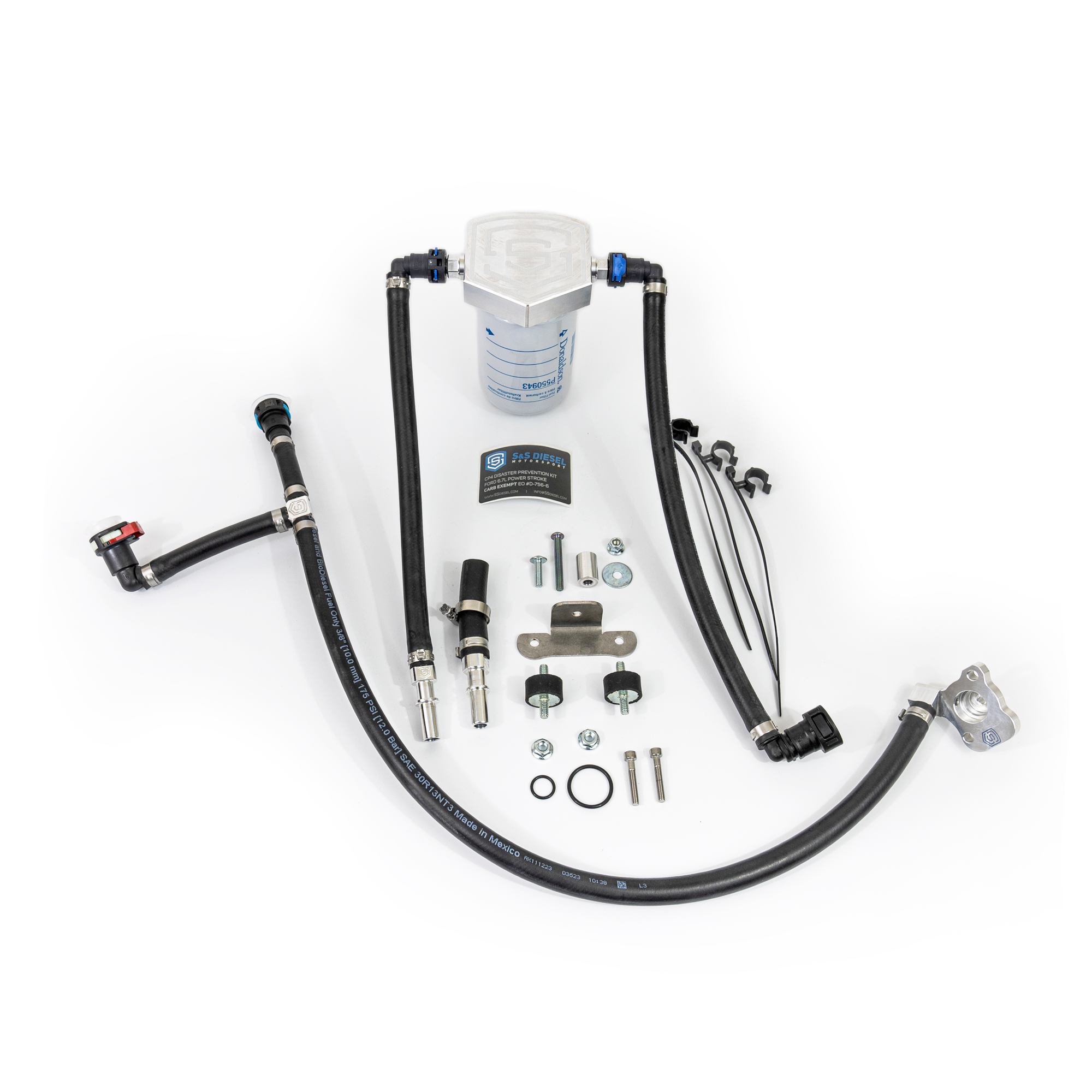
The S&S Diesel Motorsport Gen2.1 6.7L Power Stroke CP4 Disaster Prevention Kit features all quick connect lines that will eliminate the need for cutting the factory supply line, which is a debris introduction point, especially if the cut is not thoroughly deburred. It also eliminates the need to use a compression fitting, which is a potential leak point. The OE-style quick connect lines also eliminate any threaded joints that are further leak points and have the potential of generating debris during install.
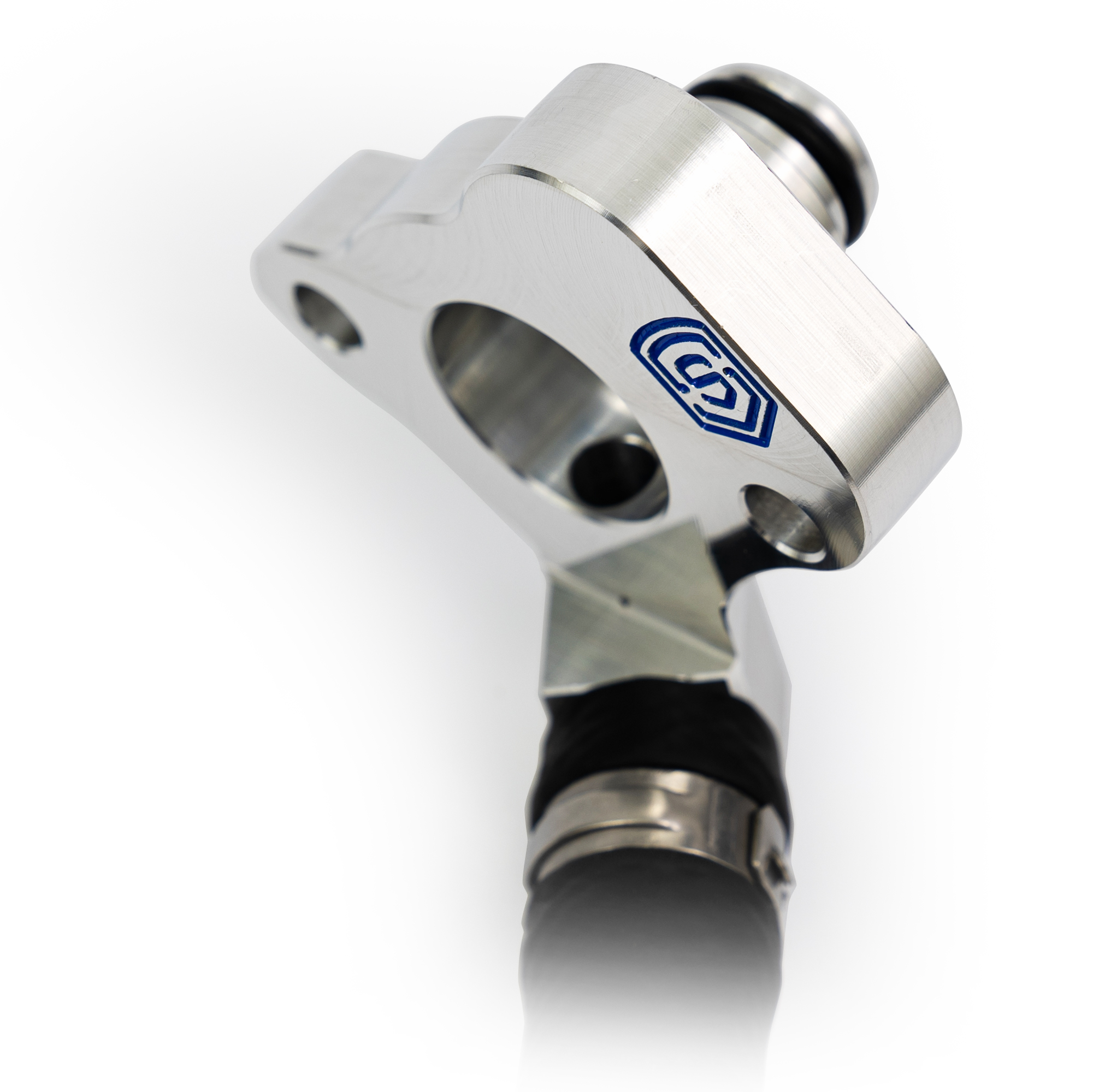
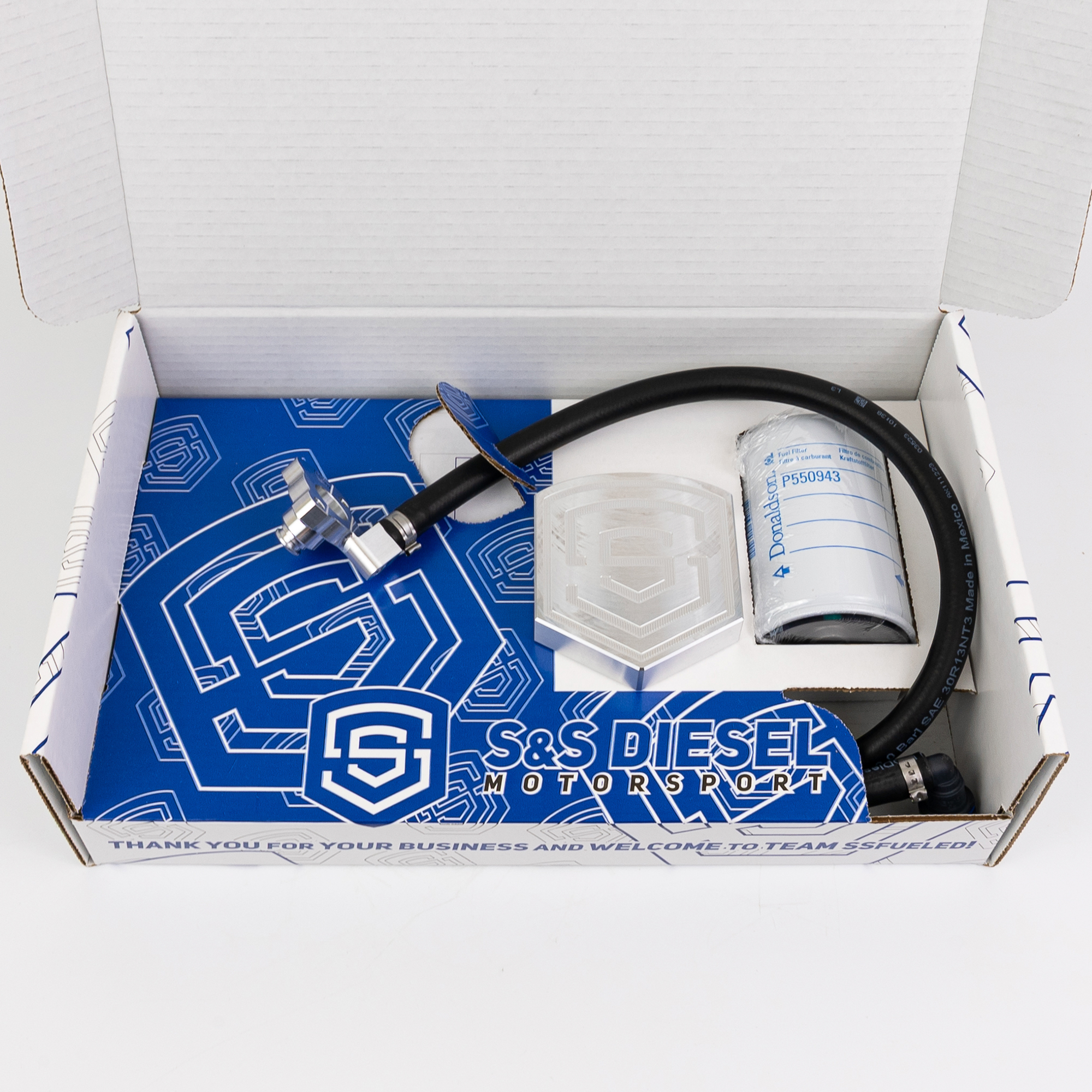
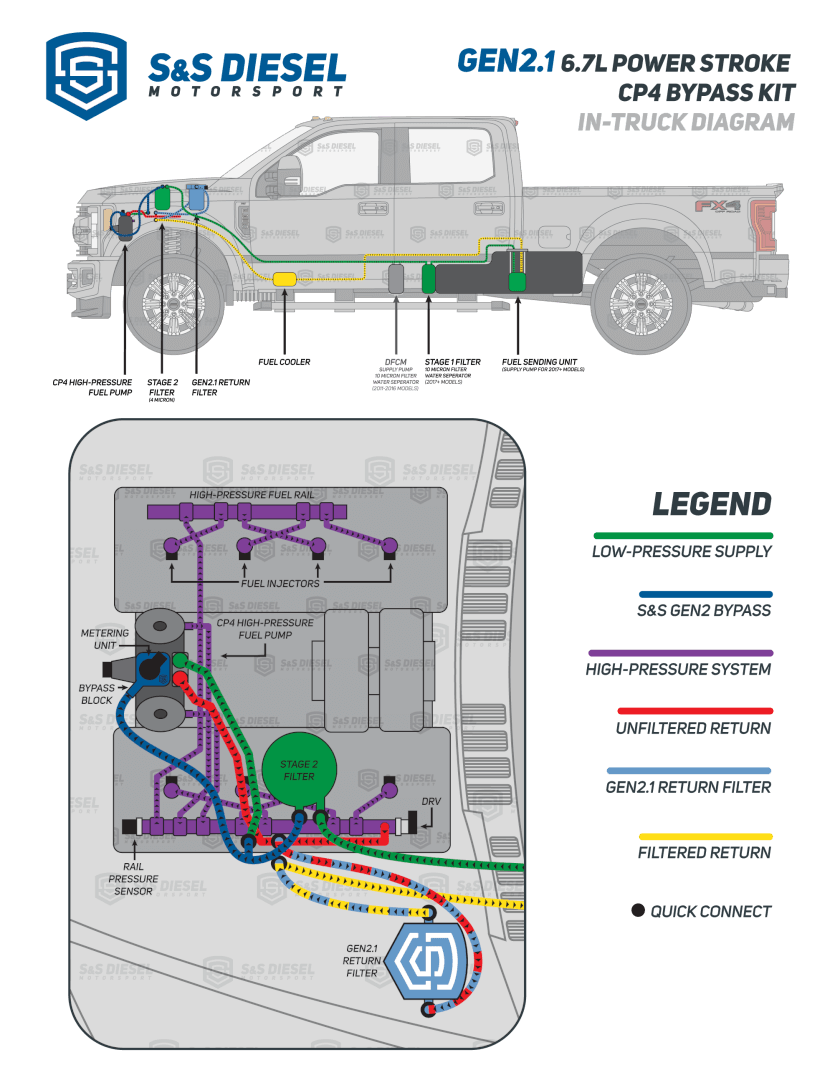
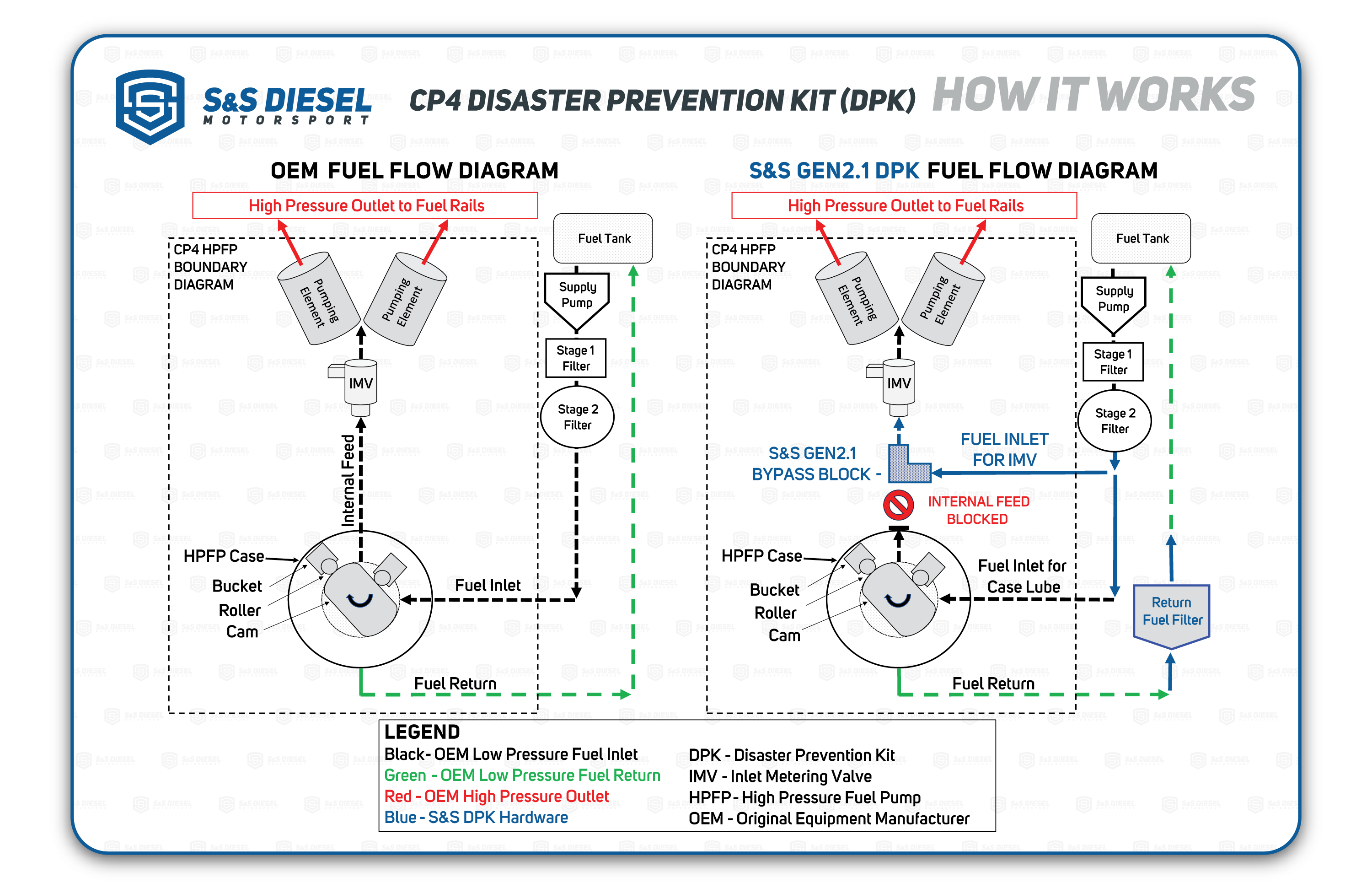
The main task of both kits is to supply the CP4 case and the metering unit/plungers independently with clean, filtered fuel, and to reroute case fuel back to the tank. There are two major improvements in how the Gen2.1 kit accomplishes it. The Gen2.1 fuel supply is split off into two separate lines 25 inches from the CP4, which will eliminate the chance of contaminated case fuel back-feeding into the clean fuel supply line. The original Disaster Prevention Kit splits off within an inch of the pump, and is more susceptible to debris back-feeding, if the CP4 failure produces enough debris to clog the fuel return system. The other improvement is what happens to the debris when it exits the pump case. The Gen2.1 kit features a billet return filter head that accepts a readily-available Donaldson P550943 spin-on fuel filter which prevents debris from reaching the tank, fuel lines, and supply pump. Previously, unfortunate victims of a CP4 failure, with the good fortune of having an original Disaster Prevention Kit installed, would still need to drop the tank and deal with all of the debris created by the failed CP4.
One would think that major improvements would come at a major price increase. Having a clear understanding of common rail diesel fuel systems, and decades of OE engineering experience, enabled the engineers at S&S to make improvements without increasing production costs. Thanks to efficient design and use of material, the S&S Diesel Motorsport Gen2.1 6.7L Power Stroke CP4 Disaster Prevention Kit (#CP4-6.7F-BP-G2.1) delivers much more value than the original, for an affordable price of $400.00 USD. There’s no longer a need to distinguish what year the truck was made, the new Gen2.1 Disaster Prevention Kit will fit 2011 to 2025 Ford Super Duty pickup trucks with the 6.7 Power Stroke Diesel engine.
For those looking to improve the debris management of their first-generation Disaster Prevention Kit, the S&S Gen2.1 Fuel Return Filter Assembly (#CP4-6.7F-BP-G2.1-RFA) can be purchased separately for $160.00 USD.
The new Gen2.1 return filter head uses the same quick connect fittings and mounting hardware as the previous Gen2 filter, which allows for an easy retrofit. S&S customers who already own a Gen2 CP4 Disaster Prevention Kit can purchase the Gen2.1 Filter Head Upgrade (CP4-6.7F-BP-G2.1-FHU) to update their kit to the Gen2.1 spec for $120.00 USD. When considering future filter changes, the Donaldson P550943 replacement filters will be much less than the previous Gen2 filters, and they can be purchased from most auto parts stores.
Does it really work or is it just “Snake Oil?” Watch video series below to see what happens when we purposely fail a CP4 with the S&S Gen2.1 Disaster Prevention Kit installed.
Installation Video

Learn more from DieselArmy.com
Download Installation Instructions
ERROR CODES
The P228(X) codes refer to the PCV or pressure control valve that is on the rail. The location of this PCV varies based on the truck. A LML PCV is on the front of the rail closest to the bump and a 6.7F PCV is on the back of the rail closest to the firewall.
This code means that the PCV is either sticking more open or closed when in operation and this can effect fuel rail pressure and driveability. While this code can typically be resolved by just replacing the PCV itself, it is overall recommended to replace the entirety of the driver’s side rail. The reasoning for this is that the seal between the PCV and rail is a metal to metal seal. If it does not seal properly the issues may be exacerbated.
The PCV must be extremely tight in order to seal and any leak will not show externally; the fuel will leak into the return port. It’s a good a idea to check the tightness of new OEM rails too.
A P0093 code is present when the truck notices that a downstream leak is present within the high pressure fuel system. There are many places for fuel to leak externally, but there are only two that can leak internally.
Internal fuel leaks are leaks that occur when the high pressure fuel is flowing to and through the return circuit when it otherwise should not be. This can occur due to excess return fuel flow from injectors or excess return from a PCV or relief valve.
The best ways to test for excess injector return is to perform an injector return test in the field or to send injectors into us for testing so that we are able to test the return flow. The best way to check for PCV or relief valve excess return is to ensure it is tighten down entirely and in some instances check return flow from the rail to see if there is return at cranking.
This code generally refers to the lack of rail pressure at cranking. A certain amount of pressure is commanded by the ECM and if that is not met (within reason), then the truck will not start. Likely culprits leading to this could be bad lift pump, excess return flow from the injectors or PCV, a bad HPFP, or a bad sensor.
A P0001 code is thrown when the truck notices that the Metering Unit/VCV/FCA is not receiving any signal. This can be due to it being unplugged, not fully seated, or a harness issue. This code means that the pump is running wide open as there is no current to tell it how open or closed it needs to be when in operation.
If fuel filter pressure switch switching frequency > 10, code is set – Indicates low supply pressure. Monitor fuel supply pressure from the lift pump (low pressure fuel system).
Ford’s error code description: “If the location of the gap on the crankshaft sensor wheel occurs at a location on the camshaft sensor wheel that is more than 6 degrees from the expected location for two detection attempts, the code is set.”
If this code is set, it is likely that the truck has a slipped crank gear. This can occur from excessive load on the engine such as aggressive aftermarket tuning.
FORD 6.7L DISASTER PREVENTION KIT
With the 6.7L Powerstroke having a lift pump, the likelihood of air entering the system past the lift pump is extremely slim. This is due to the constant 60 psi that is within the lines that would cause an external leak instead of air suction if a seal were to be damaged or misplaced. A no start after a DPK install is generally broken up into two categories:
The first category is an air lock situation where there is air trapped within the high pressure fuel lines and rails. This air can be expelled by cracking injector lines and running the lift pump. Once fuel begins exiting the cracked fittings, you can then tighten them back down to ensure no more air enters into the system in that spot. Performing this method will help ensure all air is removed from the high pressure fuel lines and rails.
The second category is either an air bubble or piece of debris that has stuck an outlet valve internally within the CP4 that is preventing the pump from generating the commanded rail pressure. This is remedied by taking a long extension, a brass hammer, and another person. The second person would need to crank the truck while the other taps on the CP4 plunger heads with the extension and hammer. This method dislodges the air bubble or piece of debris from the outlet valve allowing the CP4 to operate normally.
At this moment the DPK is only available for the 6.7 Powerstoke market ranging from 2011-2024s with some reports of 2025s as well. We are always looking to expand into new markets that could also benefit from this kit but at this time it is only available for the 6.7 Powerstroke.
This is a good sign of a CP4 failure. In the event of a CP4 failure, the return fuel going through our kit can be heated to higher temperatures than normal. If you find yourself with a melted fitting, it is a good sign that the pump has failed.
Yes, when placing your order through one of our direct dealers use part number CP4-6.7F650-BP-G2.1 and inform them that it will be going onto an F650/F750 so we can make sure to build a kit that is adapted for these trucks.
Our recommendation is to change it at the same time as the other fuel filters on the vehicle. Ford recommends changing fuel fuel filters every 22,500 miles or every 3rd oil change.
If you experience a CP4 failure with the Gen2.1 DPK installed, all you will need to replace is our return side filter and install a new CP4 pump, or upgrade to a DCR pump conversion.
To ensure that the kit did its job, you can inspect the metering unit on the pump; the metering will be clean, meaning any debris made by the CP4 was successfully rerouted to the return side filter. You can blow out the return lines to our return side filter, but any residual debris in the lines will be captured by the return side filter.