THE LONG-AWAITED FORD CP4 SOLUTION
FORD 6.7L DCR PUMP CONVERSION
S&S Diesel Motorsport®, the common rail diesel injection experts, teamed up with PurePower Technologies, Inc.®, the aftermarket division of longstanding fuel system manufacturer Stanadyne®, to do the impossible. Collectively, they solved the widely-known CP4 high-pressure fuel pump problem plaguing Ford Super Duty trucks using the 6.7L Power Stroke diesel engine.

FAILED CP4 HIGH-PRESSURE FUEL PUMP

FAILED CP4 HIGH-PRESSURE FUEL PUMP

FORD 6.7L POWER STROKE DIESEL

FORD 6.7L POWER STROKE CP4 PROBLEM

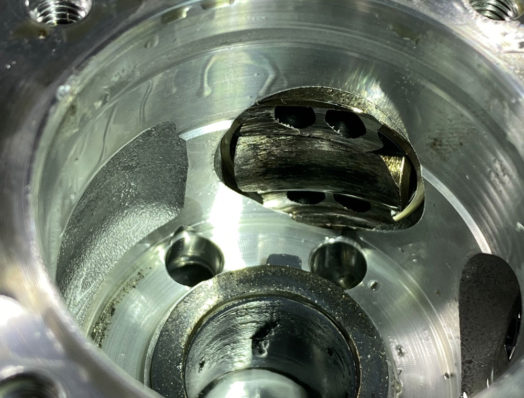
The CP4 has a well-earned reputation for failing without warning, creating sudden power loss, and taking out the expensive high-pressure fuel system in the process. Despite having to deal with being broken down on the side of the road, truck owners will be facing fuel system repairs that can easily exceed $10,000. The unreliable reputation is supported by recalls and lawsuits leveled at various auto manufacturers that use the CP4 in their production vehicles.
FORD 6.7L DCR PUMP CONVERSION

FORD 6.7L DCR PUMP CONVERSION

OE FIT AND FUNCTION

DIRECT DROP-IN SOLUTION

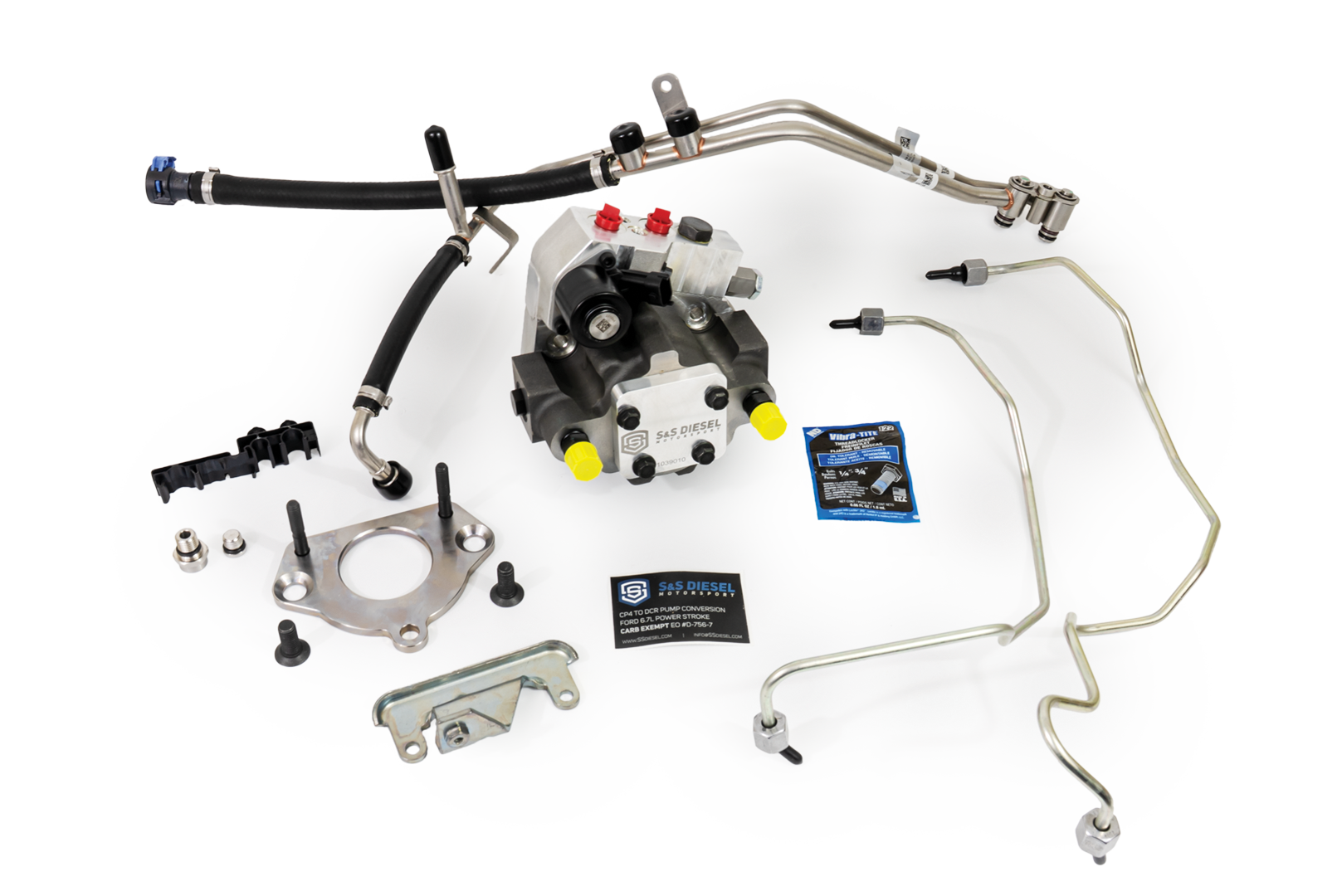
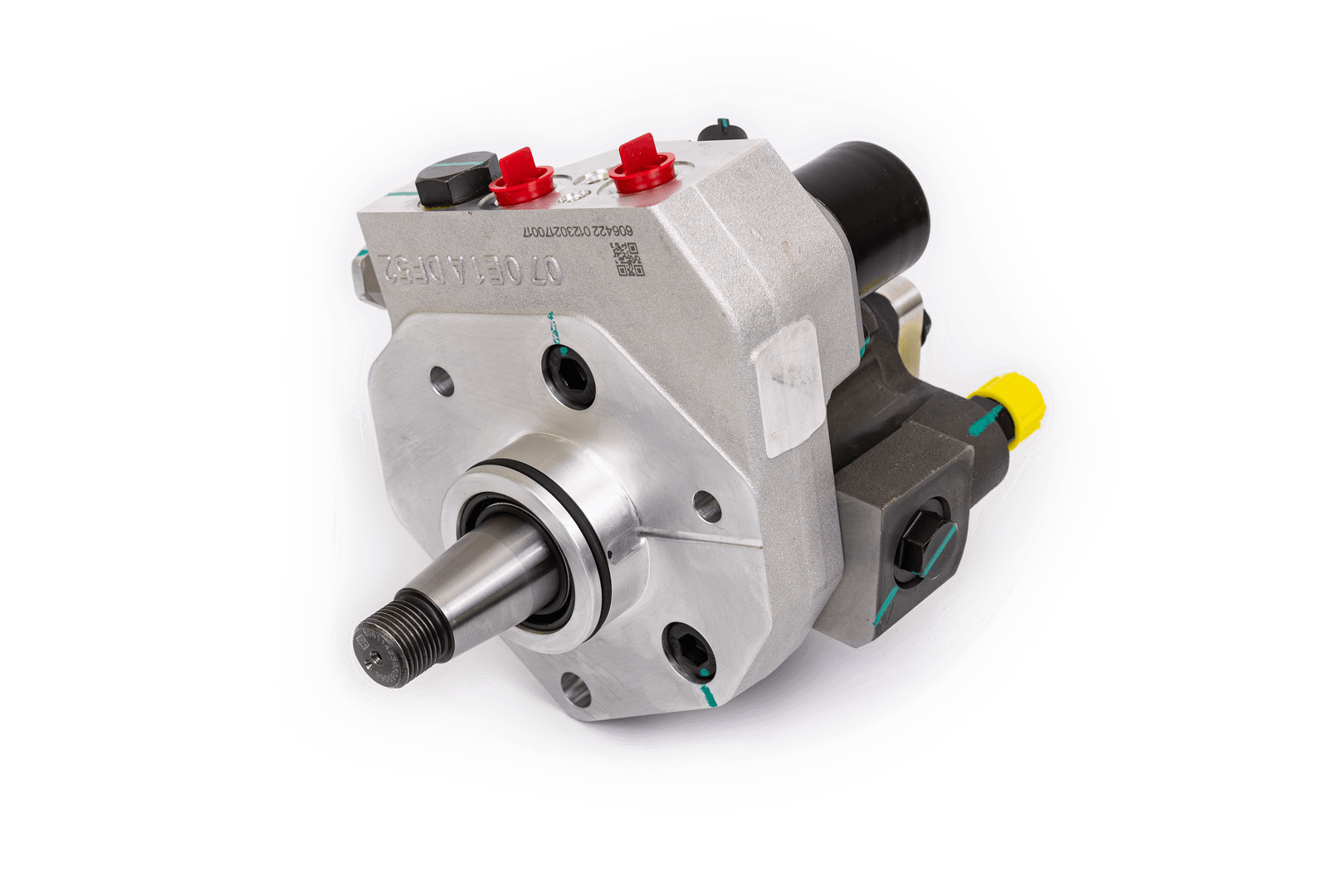
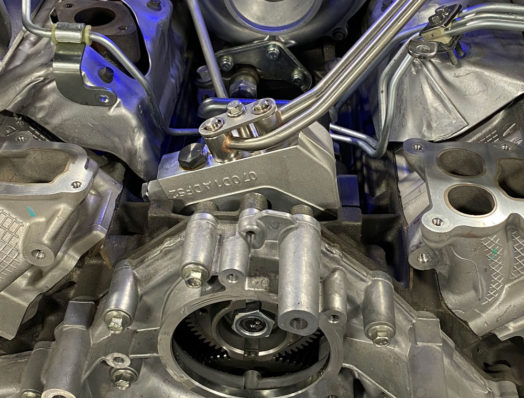
Removing the CP4 is the obvious solution, yet developing a durable plug-and-play CP4 replacement with OE fit and function is the game-changing catalyst created by S&S Diesel Motorsport and PurePower. Starting off with a proven Stanadyne DCR fuel pump design, a joint team of S&S and PurePower engineers developed a variant specifically for the Ford 6.7L Power Stroke that matches the CP4 output curve and does not require any calibration changes. Combining that with OE-grade braided hose and steel fuel lines gives Ford Super Duty owners a more-reliable CP4 replacement that looks and performs like original equipment.

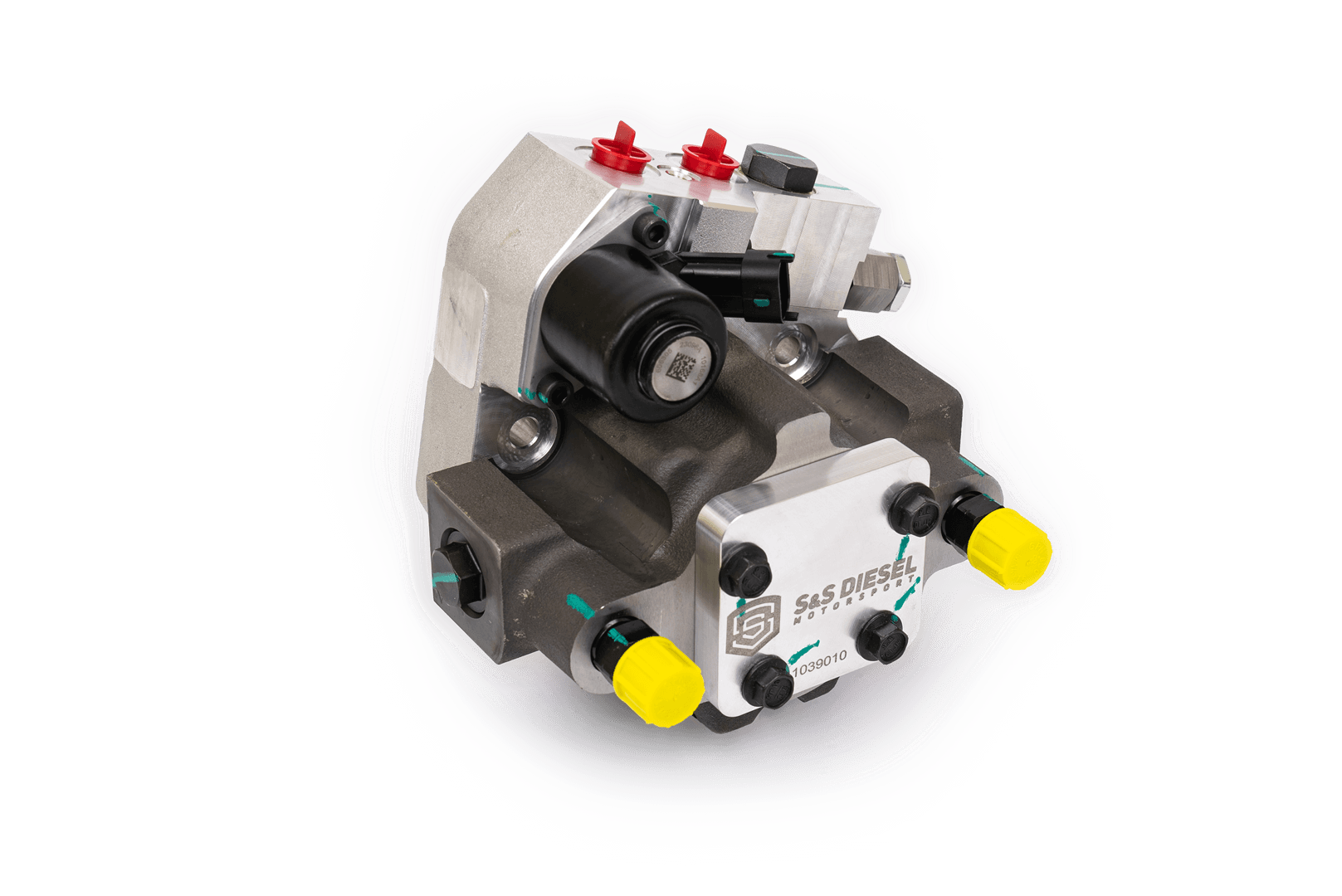
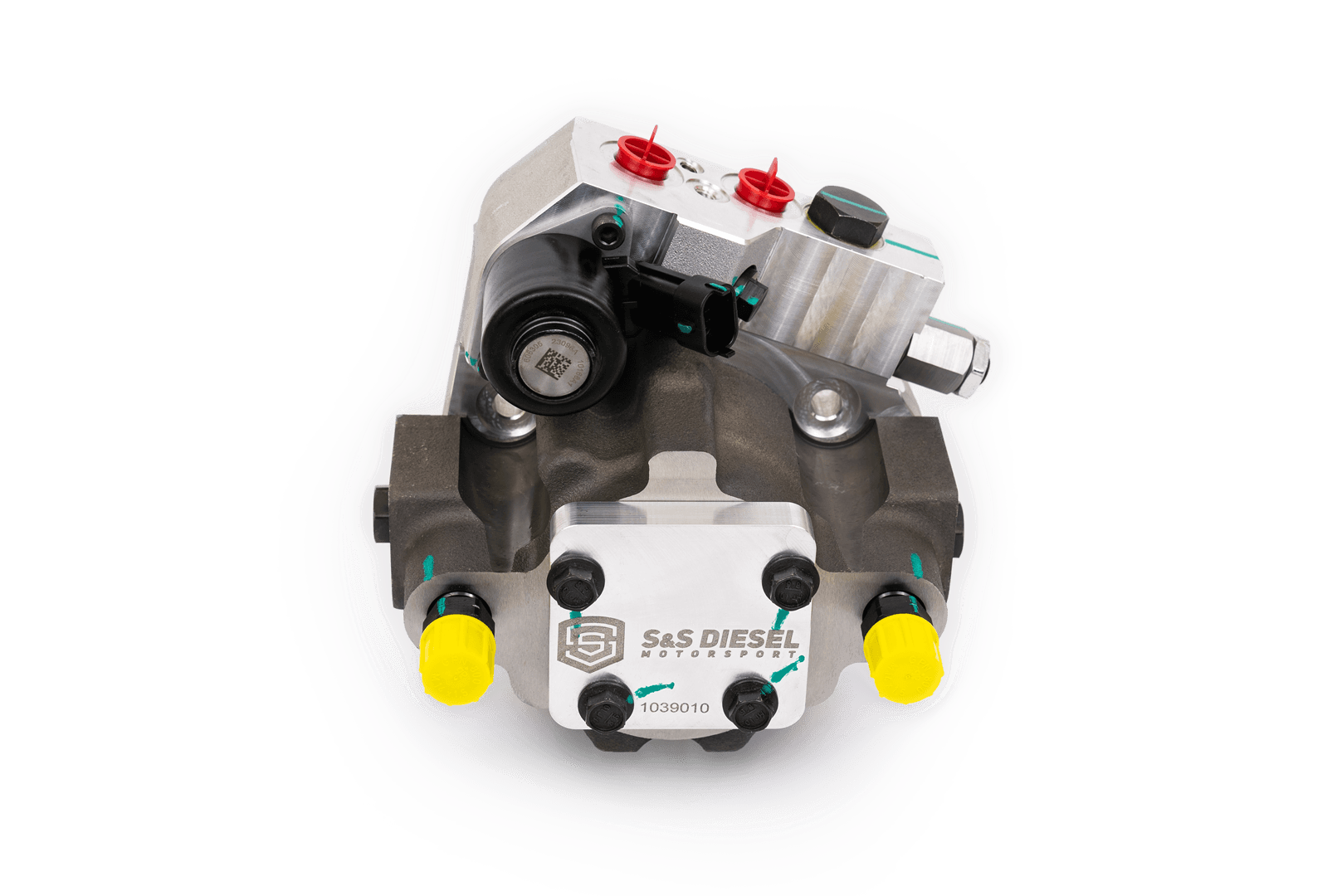
FORD 6.7L POWER STROKE DCR PUMP

FORD 6.7L POWER STROKE DCR PUMP

PATENTED ECCENTRIC DRIVE

DURABLE DCR HIGH-PRESSURE FUEL PUMP

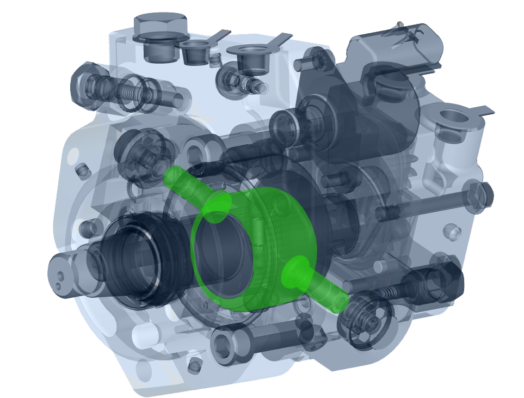
The two-piston DCR pump is based on a compact and modular design for easy integration, has low hydraulic and acoustical noise, features ultra-fast response times, and is biofuel and low-lubricity fuel compatible. It uses a patented eccentric drive pumping technology, with pressure-lubricated cam and bushings, for increased performance, efficiency, and benchmark durability. The Inlet Metering Valve (IMV) uses high-quality corrosion-resistant components and proprietary features to prevent large debris from entering the actuator, providing exceptional robustness for longevity and durability in harsh environmental conditions. The DCR can provide a max fuel delivery of 1,250 mm3 per revolution (25% more than a CP4.2), producing plenty of flow for worn injectors that have high return.

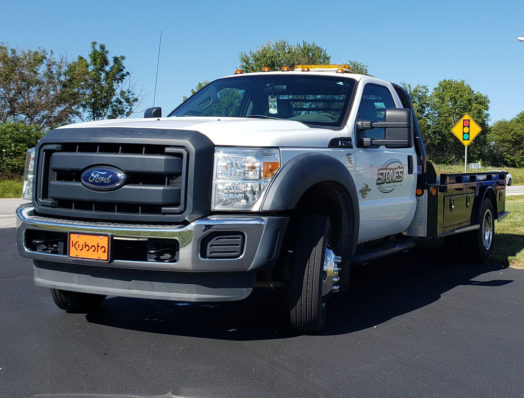
2012 FORD F450

2012 FORD F450

DCR-EQUIPED AND READY TO WORK

PROTECT PRODUCTIVITY

With a price of $2,400 USD, the S&S Diesel Motorsport Ford 6.7L DCR Pump Conversion can save Ford Super Duty truck owners $10,000 to $15,000 in fuel system repairs, and impart peace of mind knowing that their daily workhorse isn’t going to lay down on them. The DCR Pump Conversion is emissions compliant (CARB EO # D-756-7) and fits 2011 to 2025 Ford F250-F750 diesel trucks. The S&S-PurePower engineering team has validated DCR Conversions all over North America, in all types of conditions and climates, with the goal of bringing a well-refined and proven product to the market. The Ford 6.7L CP4 to DCR Pump Conversion is backed by a two-year, unlimited-mile warranty.

GET YOURS TODAY
GET YOURS TODAY

ERROR CODES

The P228(X) codes refer to the PCV or pressure control valve that is on the rail. The location of this PCV varies based on the truck. A LML PCV is on the front of the rail closest to the bump and a 6.7F PCV is on the back of the rail closest to the firewall.

This code means that the PCV is either sticking more open or closed when in operation and this can effect fuel rail pressure and driveability. While this code can typically be resolved by just replacing the PCV itself, it is overall recommended to replace the entirety of the driver’s side rail. The reasoning for this is that the seal between the PCV and rail is a metal to metal seal. If it does not seal properly the issues may be exacerbated.

The PCV must be extremely tight in order to seal and any leak will not show externally; the fuel will leak into the return port. It’s a good a idea to check the tightness of new OEM rails too.

A P0093 code is present when the truck notices that a downstream leak is present within the high pressure fuel system. There are many places for fuel to leak externally, but there are only two that can leak internally.

Internal fuel leaks are leaks that occur when the high pressure fuel is flowing to and through the return circuit when it otherwise should not be. This can occur due to excess return fuel flow from injectors or excess return from a PCV or relief valve.

The best ways to test for excess injector return is to perform an injector return test in the field or to send injectors into us for testing so that we are able to test the return flow. The best way to check for PCV or relief valve excess return is to ensure it is tighten down entirely and in some instances check return flow from the rail to see if there is return at cranking.

This code generally refers to the lack of rail pressure at cranking. A certain amount of pressure is commanded by the ECM and if that is not met (within reason), then the truck will not start. Likely culprits leading to this could be bad lift pump, excess return flow from the injectors or PCV, a bad HPFP, or a bad sensor.

A P0001 code is thrown when the truck notices that the Metering Unit/VCV/FCA is not receiving any signal. This can be due to it being unplugged, not fully seated, or a harness issue. This code means that the pump is running wide open as there is no current to tell it how open or closed it needs to be when in operation.

If fuel filter pressure switch switching frequency > 10, code is set – Indicates low supply pressure. Monitor fuel supply pressure from the lift pump (low pressure fuel system).

Ford’s error code description: “If the location of the gap on the crankshaft sensor wheel occurs at a location on the camshaft sensor wheel that is more than 6 degrees from the expected location for two detection attempts, the code is set.”

If this code is set, it is likely that the truck has a slipped crank gear. This can occur from excessive load on the engine such as aggressive aftermarket tuning.

FORD 6.7L DCR PUMP CONVERSION

The DCR needs to be timed primarily due to harmonics. Our goal when developing the DCR conversion was to release a product that was as close to stock as possible, and part of this equation is harmonics. The recommended timing instructions are present for this reason, and we recommend all installers follow the instructions step by step.

The DCR was specifically designed around the Ford 6.7L Powerstroke platform and has not gone through testing for fitment or validation on any other platform at this time.

No, this is not a common occurrence but we do have some helpful troubleshooting tips in the case one of these codes does appear. Please see our FAQ section on ERROR CODES for more information.

No. The Gen2.1 DPK was designed specifically for the CP4 on the 6.7 Ford Powerstroke platform. The DCR is different high pressure fuel pump altogether and does not suffer from the same catastrophic bottom end failures. With that said the DPK is not compatible nor is it needed with the DCR.

Yes. While the DCR was not designed to increase engine power, it does have 25% more displacement than the factory CP4. The increased pump capacity can support more power only if the calibration calls for it. Simply installing a DCR will not increase power.

While it is not a requirement to run fuel additive with the DCR, running a fuel additive of your choice is not going to hurt the pump.